Celtis is a genus of about 60–70 species of deciduous trees, commonly known as hackberries or nettle trees, in the hemp family Cannabaceae. It has a cosmopolitan distribution.
Description
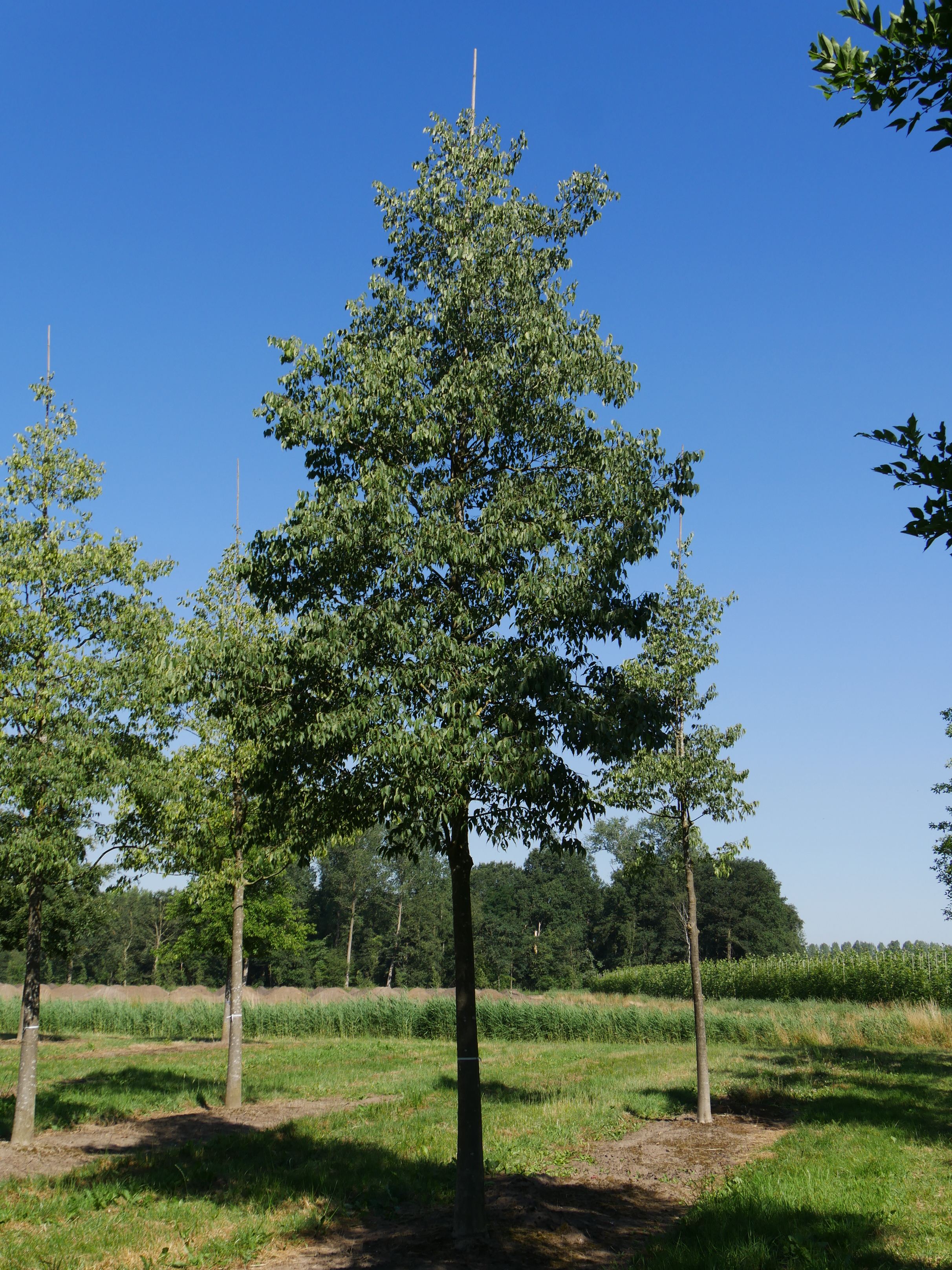
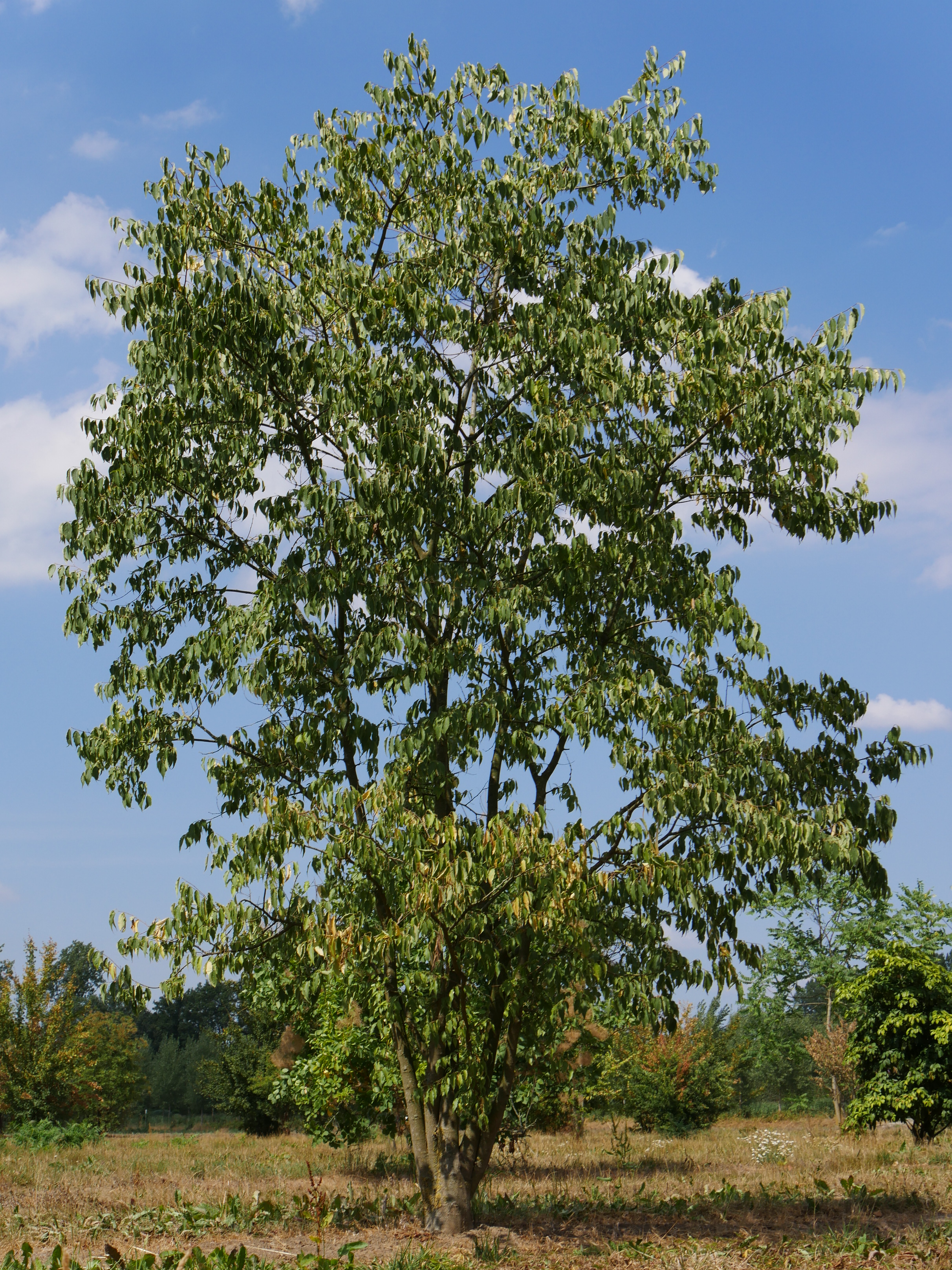
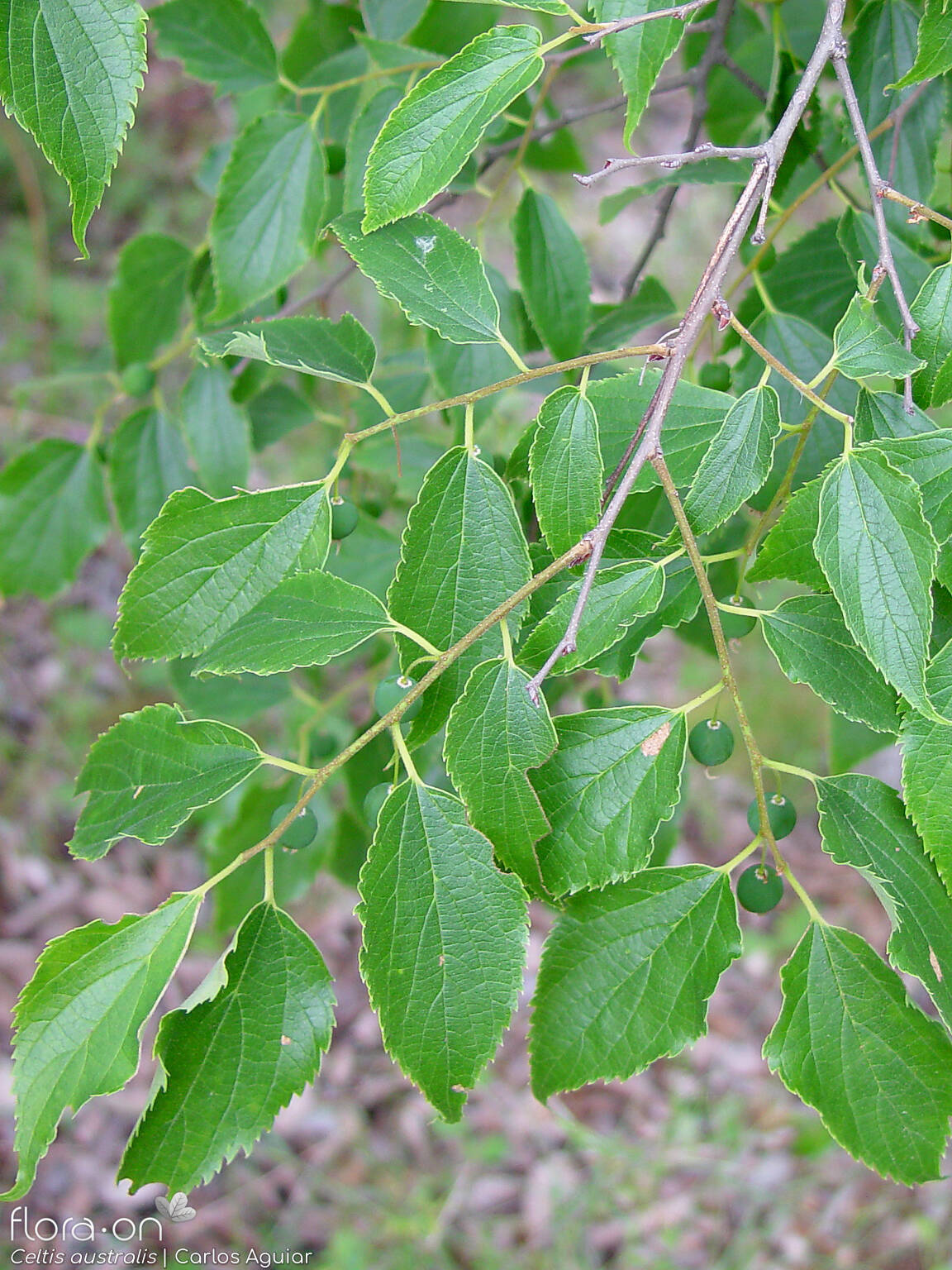
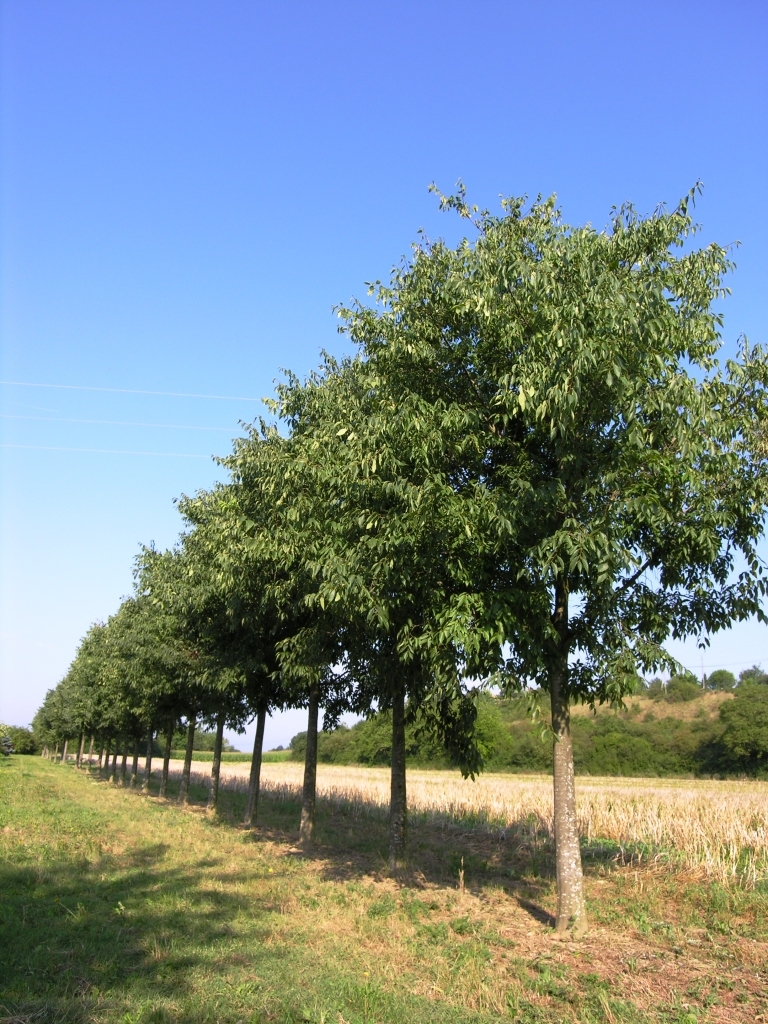
Celtis species are generally medium-sized trees, reaching 10–25 metres (33–82 feet) tall, rarely up to 40 m (130 ft) tall. The leaves are alternate, simple, 3–15 centimetres (1 1⁄4–6 inches) long, ovate-acuminate, and evenly serrated margins. Diagnostically, Celtis can be very similar to trees in the Rosaceae and other rose motif families.
Small flowers of this monoecious plant appear in early spring while the leaves are still developing. Male flowers are longer and hairy. Female flowers are greenish and more rounded.
The fruit is a small drupe 6–10 millimetres (1⁄4–3⁄8 in) in diameter, edible in many species, with a dryish but sweet, sugary consistency, reminiscent of a date.
Taxonomy
Previously included either in the elm family (Ulmaceae) or a separate family, Celtidaceae, the APG III system places Celtis in an expanded hemp family (Cannabaceae).
Phylogeny
Members of the genus are present in the fossil record as early as the Miocene of Europe, and Paleocene of North America and eastern Asia.
Etymology
The derivation of the name of this genus, Celtis, is from a Latin word for an unrelated plant, the "lotus tree" of North Africa. The word was applied to this taxon by Linnaeus for unknown reasons.
Species
As of July 2024, the following 68 species are accepted by Plants of the World Online.
Removed from genus
- Trema cannabina Lour. (as C. amboinensis Willd.)
- Trema lamarckianum (Schult.) Blume (as C. lamarckiana Schult.)
- Trema orientalis (L.) Blume (as C. guineensis Schumach. or C. orientalis L.)
- Trema tomentosa (Roxb.) H.Hara (as C. aspera Brongn. or C. tomentosa Roxb.)
Distribution and habitat
The genus is widespread throughout tropical and temperate parts of the world, occurring on all continents except Antarctica.
Ecology
Some species, including common hackberry (C. occidentalis) and C. brasiliensis, are honey plants and a pollen source for honeybees of lesser importance.
Lepidoptera
Celtis species are used as food plants by the caterpillars of certain Lepidoptera. These include mainly brush-footed butterflies, most importantly the distinct genus Libythea (beak butterflies) and some Apaturinae (emperor butterflies):
- Acytolepis puspa – common hedge blue, recorded on Chinese hackberry (C. sinensis)
- Automeris io – Io moth, recorded on southern hackberry (C. laevigata)
- Asterocampa celtis – hackberry butterfly or hackberry emperor
- Libythea celtis – European beak
- Libythea labdaca – African beak
- Libythea lepita – common beak
- Libythea myrrha – club beak, recorded on C. tetrandra
- Libytheana carinenta – American snout or common snout butterfly
- Nymphalis xanthomelas – scarce tortoiseshell, recorded on European hackberry (C. australis)
- Sasakia charonda – great purple emperor, recorded on C. jessoensis and C. sinensis
- A putative new taxon of the two-barred flasher (Astraptes fulgerator) cryptic species complex, provisionally called "CELT," has hitherto only been found on C. iguanaea.
Pathogens
The plant pathogenic basidiomycete fungus Perenniporia celtis was first described from a Celtis host plant. Some species of Celtis are threatened by habitat destruction.
Uses
Several species are grown as ornamental trees, valued for their drought tolerance. They are a regular feature of arboreta and botanical gardens, particularly in North America. Chinese hackberry (C. sinensis) is suited for bonsai culture; a magnificent specimen in Daegu-myeon is one of the natural monuments of South Korea.
The berries are generally edible when they ripen and fall. C. occidentalis fruit was used by the Omaha, eaten casually, as well as the Dakota people, who pounded them fine, seeds and all. The Pawnee used the pounded fruits in combination with fat and parched corn. The berries of C. douglasii are also edible, and were consumed by the Mescalero Apaches.
Hackberry wood is sometimes used in cabinetry and woodworking.
Gallery
References
External links
- Media related to Celtis at Wikimedia Commons
- "Nettle Tree" . Encyclopædia Britannica. Vol. 19 (11th ed.). 1911. p. 422.